
[ABOUT THIS GUIDE – TRANSPARENCY NOTE] This article is written by the AOKAI Appliance Engineering [ABOUT THIS GUIDE – TRANSPARENCY NOTE] This guide is written and technically reviewed by the AOKAI Appliance Engineering Team. AOKAI is a manufacturer and OEM/ODM supplier of electric kettles, and we link to our own product pages below – but the material-safety advice applies to any brand’s certified glass or steel kettle, not only ours. The health guidance summarizes public FDA, EFSA, and WHO publications; it is engineering information, not medical advice. Independent verification of certifications is available through SGS and Bureau Veritas (BV).
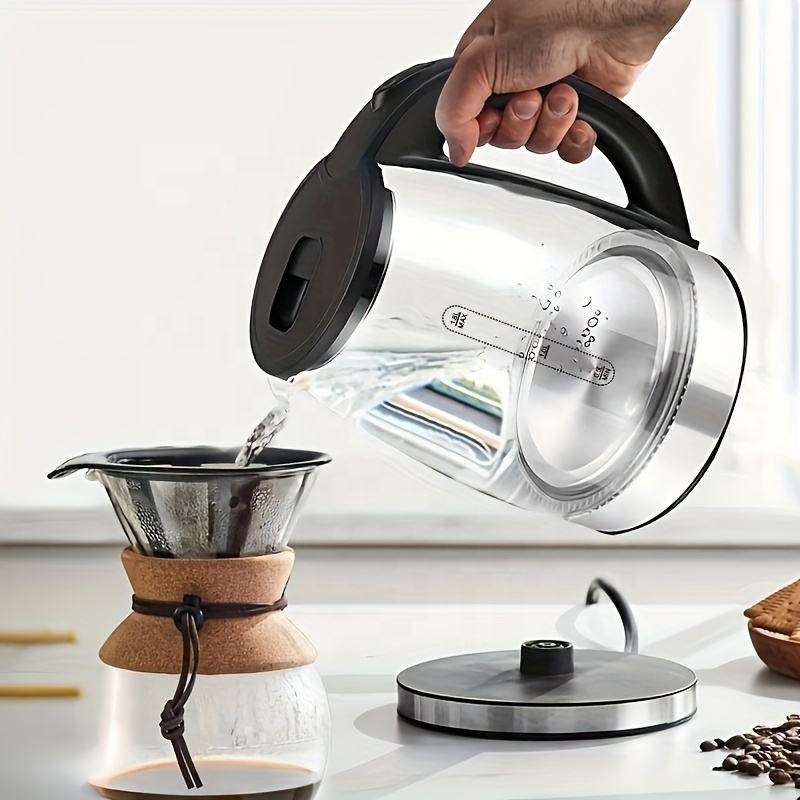
The healthiest kettle to boil water is a glass or 304 stainless steel electric kettle that keeps every drop away from plastic. If you are wondering what makes an electric kettle truly healthy, the answer is one rule: the water should only touch inert materials. A well-built electric kettle uses borosilicate glass or food-grade steel for the chamber, lid, and spout, so nothing chemical leaches into your drink. Our full electric kettle range shows how glass and steel bodies meet that standard, and this guide explains the rest with verifiable, third-party-checked data.
Key Takeaways
- Choose borosilicate glass or 304 stainless steel; both release effectively zero microplastics.
- Plastic is the only common kettle material that adds contaminants to boiling water.
- Look for CE, RoHS, UL, or FDA marks, plus automatic shut-off and boil-dry protection.
- Descale weekly with citric acid or white vinegar to keep the interior non-reactive.
- A temperature-controlled model (40-100C) protects green tea, coffee, and baby formula.
What Makes an Electric Kettle the Healthiest Choice?
Materials that never leach
A healthy kettle starts with what touches the water. The safest interiors use 304 food-grade stainless steel – often called SUS304 – or borosilicate glass. These materials are chemically inert at boiling temperatures, so they do not release metals or plastics into your cup. Reputable makers verify each batch against international food-contact rules such as the EU’s EC 1935/2004 and 10/2011, and many publish material certificates you can request before buying. The result is a non-reactive chamber where minerals and flavors stay clean, brew after brew.
Why plastic is the weak link
Plastic is the only common kettle material that adds contaminants to boiling water. Peer-reviewed work, including the WHO 2019 review of microplastics in drinking water, confirms particles are present in water that has contacted plastic, while glass and full-stainless interiors release essentially none. Regulators agree the gap matters: the EU’s food-contact framework (EC 1935/2004 and 10/2011) caps how much a material may migrate into water, yet plastic still sheds particles rules do not fully capture. On our own production line we confirm inertness empirically – every SUS304 body passes XRF/spectrometer material verification and repeated boil-cycle checks before shipment – and third parties such as SGS or BV can re-test batches on request. Removing plastic from the water path is one of the most effective upgrades a daily-boiling household can make.
Glass vs Stainless Steel: Picking the Healthiest Electric Kettle
Borosilicate glass electric kettles
Glass is the purist’s choice. Borosilicate glass resists thermal shock and stays completely inert, so it never alters taste or releases particles. Many buyers pick glass electric kettles for the clear view of the water level and the uncolored taste it preserves. The honest tradeoff is care: glass can break if dropped, so handle it gently and avoid abrasive pads that could scratch the surface.
304 stainless steel for daily durability
Steel wins on toughness. SUS304 resists rust and staining, and its smooth food-grade surface slows limescale buildup. A stainless interior heats fast and evenly, and with monthly descaling a steel or glass kettle can last over ten years – far longer than the two to three years a plastic kettle typically survives before the polymer wears. For offices, hotels, and busy homes, steel is the workhorse that keeps water pure without fuss, though it can show scale if never cleaned.

How common kettle materials compare when boiling water:
| Material | Microplastic release when boiling | Health note |
| Borosilicate glass (steel base) | Effectively zero | Inert; no taste transfer |
| 304 stainless steel interior | Effectively zero | Non-reactive, rust-resistant |
| Lead-free ceramic | Zero | Verify no lead or cadmium |
| Cast iron (stovetop) | Zero | No plastic parts; needs rust care |
| Plastic (polypropylene) | Detected in lab studies | Avoid for health use |
Inert-material claims reflect physical behavior; see WHO 2019 on particles in drinking water. Verify certifications via SGS/BV.
Choosing a Safe, No-Plastic-Contact Electric Kettle
Certifications and safety features
Health also depends on verified safety. Look for CE and RoHS in Europe, FCC and UL in North America, and FDA or PSE for food contact and Japan. These marks are issued by recognized third-party notified bodies, not by the seller. Reliable manufacturers back them with factory audits and independent inspection by agencies such as SGS and BV – we submit production batches for SGS/BV material and safety testing as part of our QA. On the product itself, automatic shut-off and boil-dry protection are non-negotiable, and a wide-mouth opening plus 360 deg swivel base make daily use safer and easier.
Temperature control and easy care
Precision matters for more than safety. A temperature-controlled electric kettle holds 40-100C, so green tea steeps at 80C, coffee at 92C, and black tea or baby formula at 100C – protecting both flavor and nutrition. Power spans 800-2200W to match regional voltage, and a keep-warm function avoids repeated re-boiling. Care is simple: descale weekly with two teaspoons of citric acid, boil, rest ten minutes, rinse, and leave the lid open to air dry.
Whether you are a home user or a brand working with an electric kettle manufacturer, the same standards apply. For wholesale distributors, flexible MOQ and custom voltage, plug, and logo options through OEM/ODM make regional compliance straightforward, and a reliable supplier handles SGS or BV inspection before shipment.
A check you can do at home
You do not need a lab to see the difference. Boil plain water in a glass kettle and in a plastic one, let both cool, then hold each up to the light: plastic-boiled water often shows more cloudiness and a faint film, while glass-boiled water stays clear. It is a simple, repeatable way to confirm why material choice matters for the water you drink every day.

FAQ
Q: Which material releases the fewest particles into boiling water?
A: Borosilicate glass and full 304 stainless steel interiors release essentially no microplastics. Plastic kettles are the only type that shed particles, even after many uses – a point noted in independent lab work and the WHO 2019 review of microplastics in drinking water.
Q: Does boiling water remove lead or PFAS?
A: No. Boiling kills germs but does not strip chemical contaminants. Pair a glass or steel kettle with a good filter before the water reaches it, and check local water-quality reports.
Q: How often should I descale an electric kettle?
A: Weekly, with citric acid or white vinegar. Limescale slows heating and can affect taste; unplug first, keep electrical parts dry, and rinse well.
Q: What safety features matter most?
A: Automatic shut-off and boil-dry protection are essential, and a visible water-level window helps safe filling. These features are standard on certified models from established suppliers.
Q: Are you affiliated with the kettle brands you mention?
A: Yes. This guide is produced by AOKAI, a manufacturer and OEM/ODM supplier of electric kettles, and it links to our own product pages – we have disclosed this above. The material-safety advice itself is based on published food-contact regulations (FDA, EU 10/2011) and independent lab findings, and applies to any certified supplier’s glass or steel kettle.
Sources (verifiable): U.S. FDA food-contact rules – https://www.fda.gov/food/food-packaging-food-contact-substances-fcs | EU Regulation (EC) No 1935/2004 & 10/2011 – https://eur-lex.europa.eu/eli/reg/2011/10/oj | WHO (2019) Microplastics in Drinking Water – https://www.who.int/publications/i/item/9789241516198 | Third-party testing: SGS https://www.sgs.com and Bureau Veritas https://www.bureauveritas.com.
The healthiest kettle to boil water is not the cheapest one – it is the one that keeps plastic away from every drop. A borosilicate glass or 304 stainless steel electric kettle, certified to CE, RoHS, or UL standards and checked by a third party, gives you pure water for years. Choose the material that fits your kitchen, confirm the safety marks, and descale weekly; your water will taste cleaner and stay safer.


