Pet drying boxes bring multiple troubles to pet owners, featuring potential safety risks, loud operating noise, excessive heating and inefficient drying performance. About 34% of users encounter airflow, noise and temperature faults, which frequently occur in low-cost products. Pet owners also struggle with drying difficulty, cumbersome cleaning and equipment maintenance, while large dogs cannot fit into standard boxes. Regular cleaning helps remove unpleasant odors and protect pet safety.
Key Takeaways
- Keep constant supervision while using the drying box. Immediately take your pet out once it shows signs of stress.
- Opt for a model with powerful adjustable airflow and temperature settings to achieve even drying and ensure pet comfort.
- Clean the device regularly to prevent hair buildup. A hygienic enclosure effectively protects your pet’s health.
Safety Concerns with Pet Dryer Boxes

Overheating Risks
Overheating is one of the main safety hazards of cat box dryer. Excessive temperatures can cause stress reactions and even heatstroke in pets. High-end models are equipped with automatic temperature control systems to ensure safety. Owners must monitor their pets throughout the drying process and remove them immediately if any discomfort is observed. Manufacturers recommend choosing devices with adjustable temperature settings and humidity sensors to avoid overheating.
Ventilation and Airflow
Sufficient airflow is crucial for safe and efficient drying. Poor ventilation leads to uneven temperature distribution, inconsistent drying results, and may cause discomfort to pets. Manufacturers equip their products with vents and fans to optimize airflow. Qualified products typically have safety certifications such as CE and UL to ensure reliable ventilation performance.
| Safety Feature | Description |
|---|---|
| Automated Temperature Regulation | Keeps drying safe by changing heat based on real-time data. |
| Moisture Detection | Checks humidity to stop overheating and keep pets comfy. |
| Compliance with Safety Standards | Made to meet CE and UL certifications for safety and trust. |
Drying Box Performance Issues
Uneven Drying Results
Uneven drying results are a common problem with pet drying cabinets, primarily due to uneven airflow distribution. Insufficient air circulation leads to some areas of fur being damp while others are overly dry, a situation particularly common in long-haired and thick-haired dogs. Grooming experts point out that drying cabinets equipped with sensors can dynamically adjust airflow, eliminating overheated areas and achieving even drying. Products with strong airflow and adjustable speeds are suitable for all fur types and improve drying efficiency.
Air Circulation and Localized Overheating
Airflow structure directly determines drying results. Poor circulation can lead to localized overheating, causing discomfort. High-end drying cabinets use vents and temperature sensors to maintain stable heat distribution, reducing discomfort and skin irritation. Directional nozzles enable precise airflow, and adjustable heating modes are suitable for dogs living in cool environments.
Size Restrictions for Large Dogs
Standard drying cabinets are often too small, limiting the movement of large dogs and increasing the difficulty of drying. Manufacturers offer drying cabinets in various sizes to meet the needs of pets of different sizes. Large-capacity, spacious models provide a better drying experience. Pet owners are advised to check the internal dimensions before purchasing to ensure the size is correct.
| Complaint Type | Description |
|---|---|
| Compact Size | People say the size is not comfortable for big pets. It can feel small for them. |
| Noise Level | These are quieter than normal dryers, but some pets still get scared by the noise. |
| Efficiency | Some models do not dry as well as others. |
Availability of pet drying boxes
Not Suitable for Large Dogs
Many pet owners report that standard drying cabinets do not meet the needs of large dogs. Ample space to move around can reduce pet anxiety during the drying process.
Easy to Clean and Maintain
The enclosed design confines hair and moisture inside the cabinet, avoiding the hair splattering and water splashing common in traditional drying methods. This significantly reduces post-use cleaning. The smooth surface and removable chassis further simplify daily cleaning.
Hard-to-Remove Damp Areas
Some body parts are prone to retaining moisture, especially on large dogs, such as the armpits and tail base. Advanced drying cabinets use optimized airflow channels and directional nozzles to address this issue. Groomers recommend checking these easily damp areas after drying to ensure your pet’s health and comfort.
Storage Space Consumption
Drying cabinets are typically bulky and take up a lot of room space. Compact, foldable, and stackable designs have now been developed to meet the convenient storage needs of home users and pet grooming shops.
| Region | Key Factors |
|---|---|
| North America | Strong pet ownership and high spending on grooming products. |
| Europe | More people treat pets like family and want grooming services. |
| Asia Pacific | Fastest growth because of higher incomes and more pet adoptions. |
Maintenance and hygiene of pet drying boxes
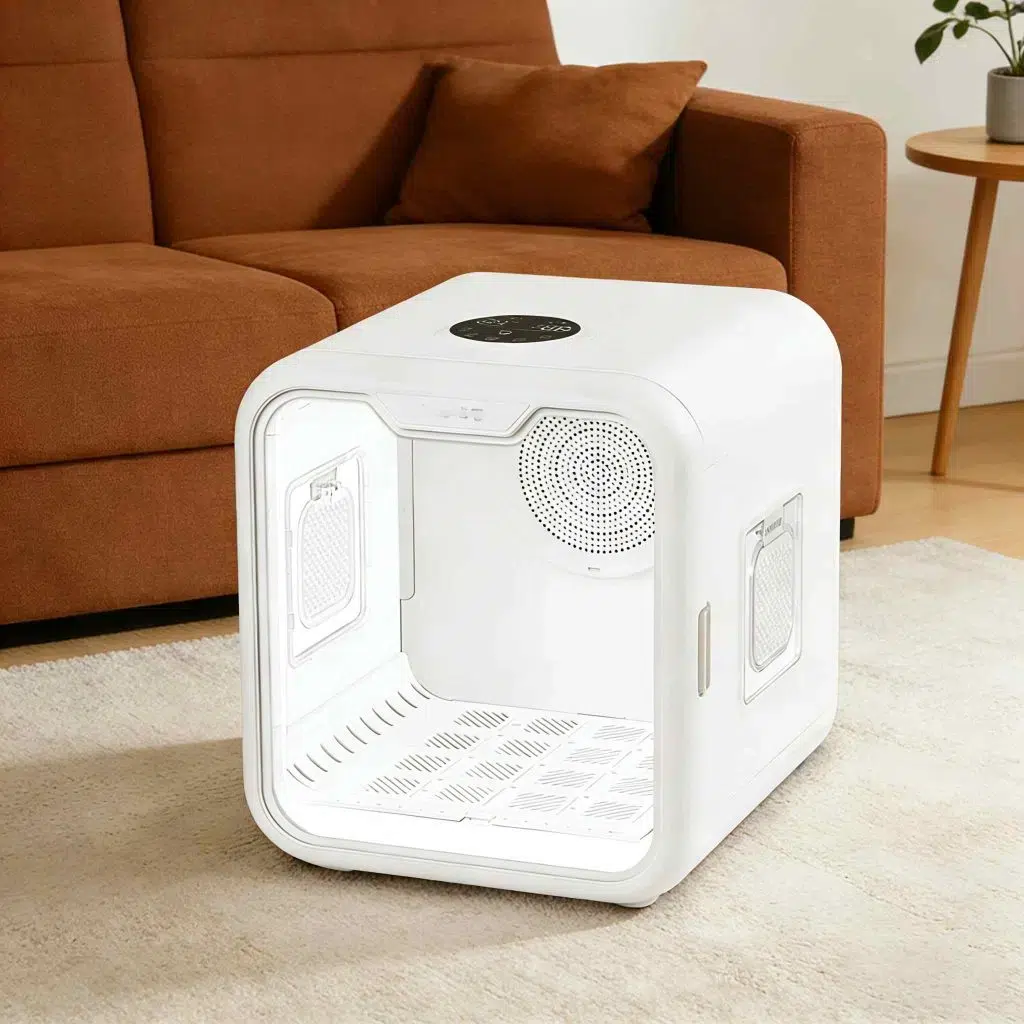
Regularly cleaning your pet drying box helps maintain your pet’s health and prevents the buildup of hair, dust, and residual moisture. An unsanitary internal environment can lead to skin diseases and infections in pets. Most drying boxes come with a removable tray and filter for easy daily cleaning.
Higher-end models also feature an LED filter replacement indicator light. The powder-coated steel casing is durable and easy to wipe clean. Weekly checks of the motor and vents ensure safe operation. Tool-free filter replacement greatly improves cleaning efficiency, making it a favorite among professional pet grooming salons.
See the table below for a comparison of maintenance features.
| Feature | Professional Pet Dryers | Human Hair Dryers |
|---|---|---|
| Construction | Industrial-grade, powder-coated steel | Consumer-grade ABS or PC plastic |
| Motor Serviceability | User-serviceable motor cartridges | Non-serviceable motors |
| Maintenance Accessibility | Tool-free filter access, LED service reminders | Limited maintenance features |
| Safety System | Dual sensor overheat protection | Single thermal fuse systems |
After drying your pet, check for any remaining dampness, paying particular attention to under their paws and around their tail, and gently pat them dry with a towel. It’s also recommended to regularly check the drying box for mold and odors. Maintaining good hygiene contributes to your pet’s comfort and health.
Pet drying boxes have some drawbacks, such as the risk of overheating, uneven drying, and the hassle of cleaning. Users should prioritize safety, comfort, and daily maintenance. Here are some important tips:
- The drying temperature should be adjusted according to the specific breed of pet.
- Choosing a low-noise model can effectively reduce your pet’s fear and anxiety.
- Choose a compact design to save space and facilitate home storage.
- Supervise the drying process throughout.
- Ensure the drying box is well-ventilated and the size is suitable for your pet’s size.
| Feature | Description |
|---|---|
| Safety Architecture | Keeps pets safe during drying sessions. |
| Temperature Control | Maintains ideal drying conditions for every pet. |
| Comfort Features | Allows pets to move freely and reduces drying anxiety. |
FAQ
What should pet owners check before using a pet drying box?
Pet owners should check the inside of the drying box for dust or lint. They should also ensure airflow is proper. Manufacturers recommend checking all safety devices before drying any pet’s fur.
How often should a pet drying box be cleaned?
Manufacturers recommend cleaning the pet drying box after each use. This helps prevent hair buildup and protects your pet from skin problems or infections.
Can a pet drying box dry all types of pet fur?
Most drying boxes are designed for different fur types. Some pets with thick fur may require longer drying times. Owners should always check their pet for any signs of dampness.