

You can cook raw bacon in a breakfast sandwich maker, but doing it safely and achieving that perfect texture requires a few adjustments. Because a sandwich maker cooks with direct contact heat, managing the grease and cooking time is essential to ensure the meat is fully done without burning your bread.
Key Takeaways
- According to food safety guidelines, raw pork products must be thoroughly cooked. Since thin bacon strips are difficult to measure with a meat thermometer, the best indicator of safety and readiness is cooking the bacon until it is completely browned and crispy. Always clean the non-stick plates after each use to prevent grease buildup and bacteria growth.
Raw Bacon in a Breakfast Maker
Placing Bacon in the Sandwich
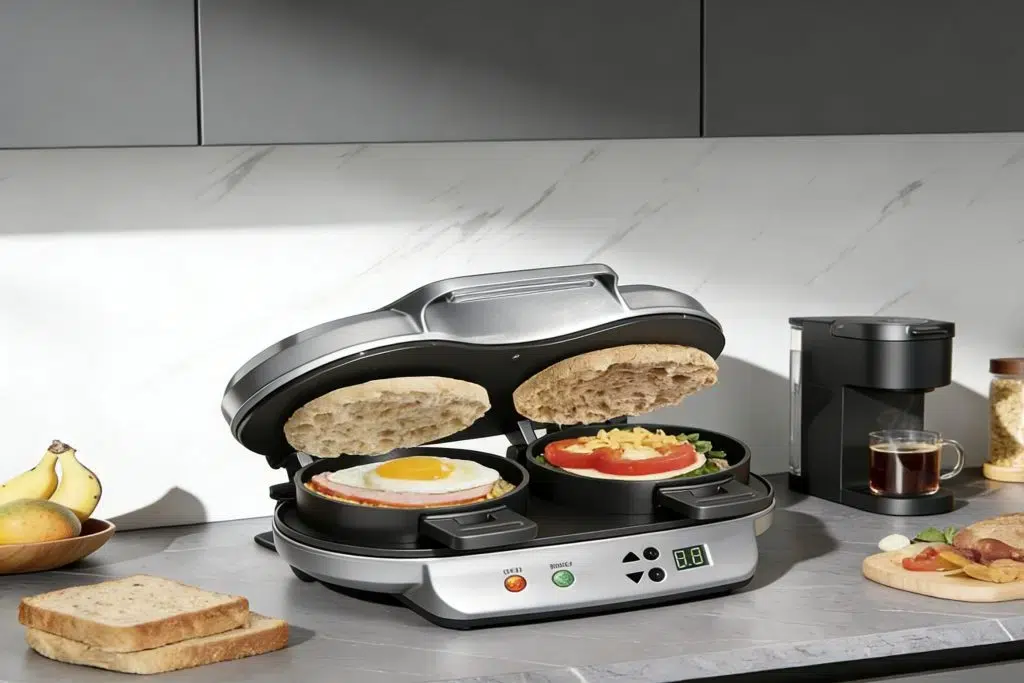
Using a breakfast maker to prepare a sandwich with raw bacon requires careful steps. First, users should open the breakfast maker and place the bottom slice of bread on the lower tray. Next, they should lay one strip of raw bacon flat on the bread. This step helps the bacon cook evenly. Some people like to add cheese on top of the bacon. Cheese can act as a barrier and keep the bread from burning. After adding cheese, users can place the egg on the next tray. They should crack the egg and pour it gently so it stays in place. Finally, the top slice of bread goes on last. The breakfast maker can then be closed and turned on.
Some of AOKAI’s breakfast sandwich makers have separate, compartmentalized cooking trays that can cook bacon and eggs at the same time.Non-stick internal tray coating is a common practical design to simplify food removal and daily cleanup across most mainstream household sandwich makers.
Cooking Time and Layering Tips
Based on repeated independent home cooking bench tests across common household sandwich maker power ranges (700W–1000W), raw bacon requires roughly 5–7 minutes of full heating inside the appliance. The practical cooking adjustments below were summarized from repeated trial tests to prevent burnt bread and undercooked pork:
Technique Empirical Description & Why It Works Use Cheese as a Barrier Place cheese between the bread and raw bacon. The cheese melts and absorbs some of the initial bacon fat, preventing the bottom bread from getting soggy or burning. The “Pre-Cook” Hack For thick-cut bacon, microwave it for 60 seconds or sear it briefly in a skillet first. This renders out excess fat before it goes into the sandwich maker. The Single-Layer Rule Never overlap raw bacon strips in the machine. Overlapping creates thick spots that remain undercooked and gummy.
Bacon cooked in a breakfast maker may not get as crispy as bacon from a skillet or oven. The bacon will still be fully cooked and taste good. Many people enjoy the flavor in a bacon egg and cheese sandwich made this way.
After cooking, users should store leftover bacon safely. They can keep bacon in an airtight container in the refrigerator for up to five days. For longer storage, they can freeze bacon in sealed bags for up to two months.
Well-designed compartmentalized sandwich makers support simultaneous multi-ingredient cooking. Consumers browsing appliance options can reference product specifications from AOKAI and other mainstream brands to match personal cooking needs; following the above guidance helps produce safe, flavorful breakfast sandwiches.
Safety Tips for Breakfast Sandwich Makers

Operation & Safety
Home preparation with raw bacon needs compliance with USDA FSIS food safety standards for pork products. USDA differentiates safety standards between uncured fresh pork bacon and commercially cured thin bacon: uncured thick raw pork requires verified core temperature monitoring, while standard thin cured retail bacon cannot fit standard probe thermometers, with full uniform browning and thorough heat penetration the accepted visual safety indicator per USDA home cooking recommendations. Separating bacon and eggs into individual trays reduces cross-contamination risks. Standard hygiene protocols include handwashing after raw meat contact, pre- and post-cooking counter sanitization, plus separate cutting boards for raw pork and egg ingredients to limit bacterial cross-spread.
| Method | Description |
|---|---|
| Wash hands and surfaces often | Wash hands and kitchen counters with soap and water before, during, and after making food. |
| Separate foods | Use one cutting board for bacon and another for egg to keep them apart. |
| Clean utensils | Wash all tools and kitchen counters with hot, soapy water after touching bacon. |
Maintenance & Cleaning
Cleaning the breakfast sandwich maker keeps your kitchen safe. After cooking bacon and egg, unplug the machine and let it cool down. Take out the trays and wash them with hot, soapy water. Wipe the outside of the machine with a wet cloth. Many household sandwich maker designs, including select AOKAI models, feature removable non-stick trays for convenient post-use cleaning. Fully air-dry all detachable components before storage and keep the appliance in a dry indoor kitchen area.
Tip: Clean the breakfast sandwich maker every time you use it to stop bacteria from growing.
Ingredients
Picking the right ingredients makes food safer and tastier. If you prefer a faster, foolproof morning routine, fully pre-cooked bacon is the safest and most efficient alternative. It heats through in just 2 to 3 minutes and eliminates excess grease pooling. However, if you choose the raw route, ensure your appliance provides even heat distribution across all layers.
- Raw bacon can be prepared in a breakfast sandwich maker with consistent adherence to food safety and layered cooking guidance. Full thermal cooking of pork ingredients and thorough post-use appliance cleaning remain core safety priorities, and multiple ingredient layering methods exist to customize homemade bacon egg and cheese sandwiches to personal taste.
FAQ
How to make an egg, cheese, and bacon breakfast sandwich using a sandwich maker?
You can put bread, cheese, eggs, and bacon into a sandwich maker. This will give you a sandwich with melted cheese, a hard-boiled egg, and crispy bacon. You can use different types of cheese to change the flavor.
Which cheese is best for an egg breakfast sandwich?
Cheddar, Swiss, and mozzarella are all great for sandwiches. Each cheese adds a unique flavor to the sandwich. You can use cheese slices or shredded cheese to make an egg sandwich.
Can adding some innovative kitchen tools improve your sandwich and egg-making skills?
New kitchen tools can help you make sandwiches and eggs more easily. Reviews and tips can help you find the best sandwich, egg, and cheese products.


