
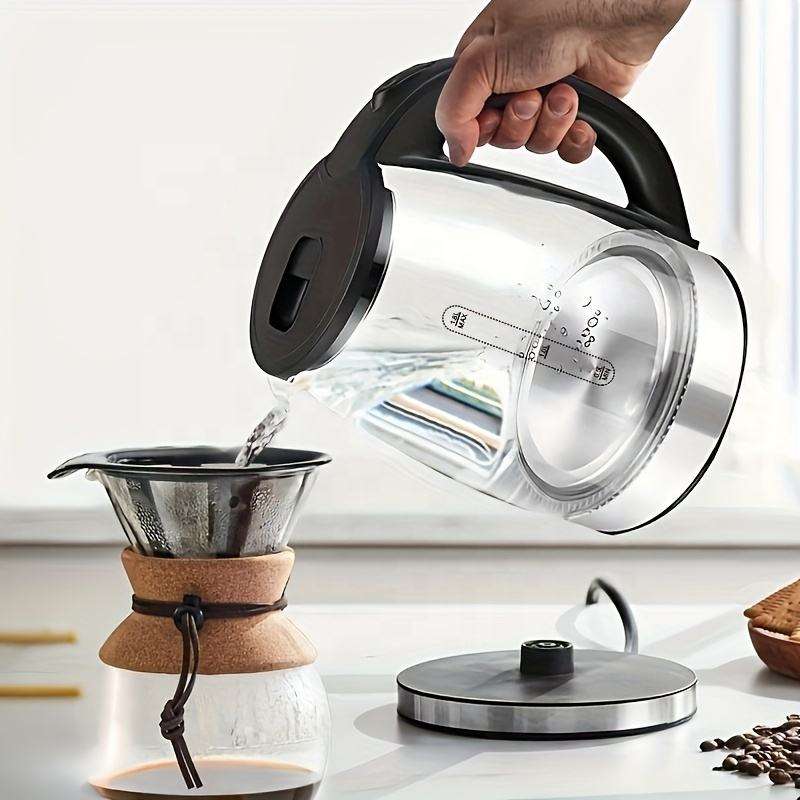
For most households, a cordless kettle is the more convenient choice.You can lift it off its powered base and pour without a cord trailing across the counter. That design makes everyday use feel less awkward. However , it still plugs into a wall outlet through its base; only the kettle itself is cord-free when you lift it to pour. A traditional corded kettle keeps its power cord attached, which may feel less convenient but can be a simpler, lower-cost option. Consider these trade-offs alongside your kitchen setup and budget before choosing.Aokai’s full electric kettle range features cordless designs for convenient everyday use, and this guide explains the trade-offs with clear, practical details.
Key Takeaways
- A cordless kettle wins for most homes. It allows easy pouring. It removes cord dangers.
- A corded kettle costs less upfront. A cordless model offers more value through safety features and ease.
- Boiling speed depends on wattage, not cord style. Check wattage first. This step ensures fast boiling.
- Both kettle types last for years with simple care. Descaling protects the heating element. Cord checks prevent failures.
- Choose a cordless kettle for daily ease and safety. Choose a corded kettle for the lowest price.
A Cordless Electric Kettle Is the Convenience Winner

Lifting and Pouring Without a Cord
A cordless electric kettle changes how people interact with a daily appliance. The kettle sits on a powered base during heating. Once the water reaches the right temperature, the user simply lifts the kettle off. No cord tugs at the wrist. No cable drags across the counter. This design makes pouring smooth and controlled.
The freedom to move matters in real kitchens. A person can carry the kettle to a sink, a teapot, or a mug without unplugging anything. The cordless electric kettle stays ready at all times. A manufacturer designs these models so the electrical contact breaks cleanly when someone lifts the kettle. The heating stops, and the user pours with one hand. That simple motion saves time and reduces spills.
360-Degree Base and Easy Storage
A 360-degree rotating base adds another layer of convenience. The user can set the kettle down at any angle. There is no need to align a plug or find a specific spot. The kettle connects to power from any direction. This feature helps when someone is in a hurry or when counter space is tight.
Storage becomes easier as well. A cordless kettle lifts off the base and fits into a cabinet without a dangling cord. The base stays on the counter, ready for the next use. Many electric kettles for wholesale buyers include this rotating design because it suits busy households. A large electric kettle with a 360-degree base works well for families or offices. The user picks it up, pours boiling water, and sets it back down. The whole process feels natural and quick.
These small design choices add up. A cordless model removes daily friction from a routine task. That is why the best electric kettles for most homes use this format. The convenience winner is clear.
Safety: Cordless Kettles Lower Everyday Dangers
No Cord to Catch or Pull
A cordless electric kettle gets rid of a big danger at home. A regular corded model has a cable that can tangle, loop, or catch on things nearby. A child or pet might pull that cord by mistake. Then the kettle slides off the counter and spills hot water on anyone close by. A cordless design removes this risk because the cord stays on the base. The kettle lifts off with no cable attached to it.
Water and electricity are a risky mix. Water running down the side of an electric kettle and touching the filament can cause a bad shock. This occurs because water carries electricity, and kettles put water and electrical parts together. A cordless model keeps the electrical contact inside the base. The user never touches a wet cord near a power source. That gap adds a real layer of safety to daily use.
Safe Pouring and Boil-Dry Protection
Common kettle accidents include hot water spilling on users, steam burns, lid or handle failures, sudden leaks while pouring, and steam escaping through faulty seals. Many cordless kettles fix these problems with built-in safety features. A secure lid and a strong handle lower the chance of a failure mid-pour. A controlled spout helps the user pour boiling water without splashing.
Boil-dry protection is another key feature. This automatic shutoff stops the heating element when the kettle runs low on water. Without it, an electric kettle can overheat and harm internal parts. Many cordless models also have automatic shutoff controls that cut power once the water reaches a full boil. A manufacturer building these units for wholesale buyers knows that safety features drive repeat orders. A supplier that offers custom options can shape these protections for different markets. For any household, a cordless kettle with boil-dry protection and automatic shutoff gives peace of mind that a basic corded model often lacks.
Price: Are Cordless Electric Kettles Worth More?
Corded Kettles Are Often Cheaper
A corded kettle usually costs less at the register. Its design is simpler: there is no separate base, no rotating contact, and no extra wiring. The maker builds one piece with a fixed cord, so material and assembly costs stay low. This lower cost shows up on the shelf.
Budget shoppers see this difference right away. A basic corded model often sells for a few dollars less than a comparable cordless one. For someone who boils water only once a day, that savings can feel like enough. Wholesale buyers who order in bulk may also get a lower unit price on corded models. The upfront math favors the corded choice.
Cordless Models Offer Better Value
The price gap between the two types is usually small. A cordless electric kettle often costs a little more than a corded one. That small difference brings real benefits. The user gets easier pouring, a 360-degree base, and built-in safety features like boil-dry protection. These features matter every single day.
Value is not just the price. A cordless model with automatic shutoff can stop overheating and make the appliance last longer. This reliability cuts replacement costs over time. Many electric kettles also have preset temperature controls, so users can heat water for tea, coffee, or formula without guessing. A large electric kettle with these features works for a whole family or office.
A supplier who offers custom options can tailor cordless electric kettles for different markets. A factory that builds both types knows the cost gap stays small. For most buyers, the cordless electric kettle gives more for the money. The upfront savings on a corded model rarely beat the daily gains of a cordless design.
Performance: Which Electric Kettle Boils Faster?
Boiling Speed and Wattage
How fast a kettle boils depends on wattage, not on whether it has a cord. A higher wattage sends more electrical energy into the heating element each second. That extra power heats the water faster. A corded model and a cordless model with the same wattage work almost the same.
The numbers make this clear. A 1,000-watt electric kettle takes about 6 minutes to boil one liter of water. A 1,500-watt model cuts that time to roughly 4 minutes. A 3,000-watt kettle boils the same amount in about 1.9 minutes. A 3,000-watt unit boils one liter in roughly half the time of a 1,500-watt unit: about 2.2 minutes versus 4.4 minutes under test conditions. Real results change with water volume, starting temperature, and heat loss.
| Power | Example Runtime |
|---|---|
| 1,000W | 6 minutes |
| 1,500W | 4 minutes |
A buyer who wants fast results should check the wattage first. The cord style matters far less than the power rating.
Preset Temperature Controls
Many cordless electric kettles add preset temperature control. This feature lets the user pick a target heat level instead of boiling every time. Green tea needs cooler water than black tea. Baby formula needs a precise warmth. A kettle with temperature settings handles these jobs without guesswork.
Temperature control and hold keeps water at the chosen level for a set period. A parent can set temperature control and hold for formula at 2 a.m. without watching the kettle. A tea drinker can rely on temperature settings for delicate leaves. These temperature settings remove the need to boil and wait.
Some models offer several temperature control options, from warm to rolling boil. A large electric kettle with temperature control and hold serves an office or a family well. A manufacturer building these units for wholesale buyers knows that temperature control and hold drives demand. A supplier can customize temperature settings for different regions. For daily use, preset temperature control turns a simple electric kettle into a precise tool. The best electric kettles combine fast heating with flexible temperature settings.
Durability: Corded vs Cordless Kettle Lifespan
Simpler Design of Corded Kettles
A corded kettle contains fewer parts than a cordless model. The heating element, switch, and power cord all sit in a single unit. Fewer connections mean fewer things to break. With just basic care, a corded kettle can last for many years.
The cord is the weak point. Bending, twisting, and pulling every day wear out the wire inside. A frayed cord can interrupt the electrical flow. Then the kettle stops heating or heats in an uneven way. A loose plug causes the same problem. Users should check the cord often for cracks or soft spots.
Of the 10 recalls listed for electric kettles, only three relate to electrical hazards. The other faults concern the kettle body itself: one case where the plastic viewer window shattered into the kettle, one case where lead leaked inside the kettle, and five cases where handles detached.
These recalls show that body parts break just as often as electrical parts. A corded kettle has less electronic complexity. But its handle, lid, and seal can still fail over time.
Cord Wear and Cordless Bases
A cordless electric kettle keeps the cord attached to the base. The user lifts only the kettle body, so the cable never bends while pouring. This helps the cord last longer. The trade-off is an extra part: the base connection. That contact point can wear out after years of daily use.
One common failure in electric kettles is a resistor insulation fault. After it is turned on, the kettle trips the differential circuit breaker. Or it fails to heat water even though it does not trip the switchboard. A technician can check this with an ohmmeter. For a 920–1100W kettle at 230V, the expected resistance is about 48 ohms. A reading near 54 ohms can point to a problem in that part. The cable or socket on the base is another frequent failure point. A multimeter can test continuity between the wall socket terminals and the socket fixed to the base.
Other common faults include:
- Worn-out heating coil: after long use or poor upkeep, the heating coil can wear down. Performance drops, and failure can happen.
- Malfunctioning auto shut-off system: if this safety switch fails, it may cut power too early. Then the kettle cannot boil properly.
- Loose plug or damaged power cord: a bad connection or frayed cord can block electricity, so heating is uneven or stops.
- Low or unstable voltage: voltage swings, especially at peak times, can disrupt kettle operation.
- Heavy scale buildup at the bottom: mineral deposits from hard water can form on the heating element. They reduce efficiency, slow heating, and increase power use.
Scale buildup affects both types. A user who descales the kettle every few months protects the heating element. This habit makes any electric kettle last longer.
A supplier like AOKAI helps with OEM/ODM electric kettles for brands that want custom designs. A factory that makes both corded and cordless models knows the durability gap is small when users take care of the appliance. For most homes, the cordless design wins on cord life. The base contact just needs a quick check now and then.
Most homes do best with a cordless kettle design. People can boil water without dealing with a cord. Pouring hot water feels steady and easy to control. This electric kettle gives you convenience, steady heating, and the same results every time. It is the best electric kettle for busy daily routines.
A corded model still works well for people on a budget. It costs less. Its simple build appeals to anyone who likes fewer parts. Companies make basic corded kettles for simple jobs.
Pick a cordless electric kettle for everyday ease and safety. Pick a corded kettle when the lowest price or a simpler design matters most. Buyers should compare wattage before deciding which kettle fits their home.
FAQ
Does a cordless kettle need a special outlet?
No. A cordless electric kettle works with a normal wall outlet. The base plugs into any kitchen socket. Then you lift the kettle off to pour. A maker builds the base to fit local voltage rules. Before you order, check the plug type for your area.
How does temperature control work on an electric kettle?
You pick a target heat level on the base. The kettle warms water to that point. Then it stops. Many models give you several temperature settings for tea, coffee, or formula. A good temperature control system keeps results the same every time.
What safety features should a buyer look for?
Look for automatic shutoff and boil-dry protection. These safety features stop the heating element when water runs low or hits a full boil. A secure lid and cool-touch handle also help. A supplier can tell you which certifications a model has.
Can a cordless kettle boil water as fast as a corded one?
Yes. Boiling speed depends on wattage. A 3,000-watt cordless model boils one liter in about 1.9 minutes. A corded unit with the same wattage does the same. Buyers should compare power ratings instead of cord style.
Do temperature settings really matter for daily use?
They do. Green tea needs cooler water than black tea. Baby formula needs exact warmth. Temperature control and hold keeps water ready without reheating. A factory that offers custom temperature settings helps brands serve different markets. This feature turns a simple kettle into a precise tool.
How long does a cordless kettle last?
A cordless model keeps its cord on the base. That design cuts wear from bending and tugging. The base contact is an extra part to check. Regular descaling protects the heating element. With care, most kettles last for years.


