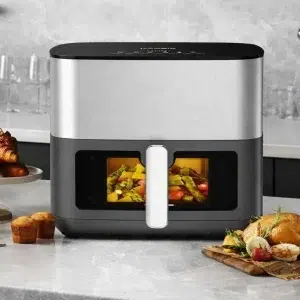
Several common kitchen items can stand in, including perforated pans or crisper trays, wire racks lined with parchment, foil pans, and oven-safe bowls or silicone molds. The best pick comes down to what matters most: airflow, containment, or easy cleanup.Safety and fit come first. Whatever you choose must sit level inside the drawer or on the rack and handle the heat of the appliance. Loose parts can shift, tip, or touch the heating element, while a snug fit keeps food steady and lets hot air move freely around it.Aokai’s air fryer takes this further, shipping with a purpose-built basket and crisper tray that lock into place, so airflow stays even without improvised fits.This guide covers air fryer basket’s safe substitutes, how each one performs, and what to check before you cook.
Key Takeaways
- Use a perforated pan or crisper tray for crispy results because hot air moves through the holes.
- Choose foil pans, bowls, or silicone molds for saucy or small foods that need containment.
- Always check that your substitute fits well and can handle the heat to avoid accidents.
- A wire rack with parchment paper keeps cleanup easy but needs food to hold the paper down.
- You can air-fry in a convection oven or multicooker with a rack or perforated pan for larger batches.
Perforated pans and crisper trays

Replacing your air fryer basket
A perforated pan, often sold as a crisper tray, is the closest functional match to an air fryer basket. Small holes cover the base and often the sides. These holes let hot air can circulate under and around food, so the bottom of a chicken wing or a potato wedge crisps instead of steaming.
Size and depth matter more than brand. Measure the inside of the drawer or the rack spacing first. A tray that sits flat with a small gap on each side works best. Deep trays hold more food but block side airflow. Check the material rating against the appliance’s top temperature before the first cook. Stainless steel and coated steel are common choices. Buyers sourcing in volume can ask a manufacturer such as AOKAI to confirm material specs and heat limits before ordering.
A tray also suits an air fryer that uses racks instead of a basket. The tray slides onto the rails and holds food at the right height. This setup keeps the air fryer basket area clear and makes loading easier.
Performance and best uses
The pros are clear: even crisping, easy cleanup, and a low price. The cons deserve equal attention. A perforated tray offers less containment, so small pieces can slip through the holes. Fit also varies by model, and a loose tray slides when the basket shakes. A tray that rattles against the basket wall will scratch the coating. Anyone who owns an air fryer and wants a spare tray can buy one separately, as long as the tray matches the air fryer drawer size.
The same tray works in convection ovens and in a toaster oven with an air fry mode. Hot air moves the same way in these appliances. A middle rack position keeps the tray level.
For small batches, a tray inside a standard air fryer basket performs close to the original. Users who cook loose vegetables or battered food may prefer a solid tray, while anyone crisping fries or reheating pizza does well with perforation. Many air-fry baskets on the market follow this same perforated design, which shows how central airflow is to the method. Shoppers comparing baskets online can check hole size and rim height before buying.
Wire racks and parchment
Safe setup for your air fryer
An oven-safe wire rack turns the drawer into a raised platform. Air moves under the food as well as over it. A sheet of parchment sits beneath the rack and catches drips, which keeps cleanup simple.
Parchment needs weight on top. Cut the sheet so it sits snugly at the bottom of the basket, with no edges past the rim. Insert it after preheating, right before the food goes in. Never run the air fryer with parchment and no food on it, because nothing holds the paper down. Skip parchment with lightweight foods such as leafy greens or thin chips. Those foods cannot anchor the sheet, and a rising edge can reach the heating element.
Most parchment is rated between 400°F and 450°F, roughly 204°C to 232°C. Food-grade parchment rated for cooking is typically safe up to about 428°F, or 220°C. Heat beyond the rating causes scorching, charring, or ignition. Keep the sheet from covering the whole basket, since full coverage blocks airflow and produces uneven cooking.
When this combo works best
This setup shines for reheating, crisping snacks, and foods that drip. Leftover pizza, frozen spring rolls, and glazed chicken pieces all benefit. The rack lifts the food, the parchment catches the mess, and the basket stays cleaner.
Small items are the weak point. Loose peas, crumbs, and thin slices fall through the rack gaps. A perforated tray handles those better. Readers who cook mixed loads can line the rack with a second sheet of parchment, though airflow drops.
The same approach works in a convection oven or a standard oven with a convection mode. Rack position and temperature guidance vary by appliance, so check the manual first. Buyers sourcing racks or parchment in volume can ask a supplier such as AOKAI to confirm heat ratings and material specs before ordering.
Foil pans, bowls, and silicone molds
Fitting them in the basket
Disposable foil pans, oven-safe bowls, and silicone molds all share one job: they hold food that would otherwise slip through gaps or leak into the drawer. A cook shapes a foil pan by hand to match the basket floor. A glass bowl or an oven-safe ceramic ramekin drops in as a ready-made vessel. Silicone molds press flat against the base and stay put during shaking.
Size and depth decide success. Leave a finger-width of space on every side so hot air still moves past the container. A deep bowl that fills the whole basket chokes circulation and slows cooking. Solid pans block airflow underneath the food, so the base browns less than the top. Shaking or flipping matters more here than with a perforated tray. A cook who plans to stir halfway through gets better results.
Pros, cons, and safety limits
Containment is the strength of this group. Saucy dishes, batters, and small pieces stay put, and the air fryer basket stays cleaner. The trade-off is browning. A solid foil pan browns more on top than underneath, and the base turns out softer. Foods that need crunch do better in a perforated basket. Baking and saucy dishes suit the solid route.
| Material | Temperature Limit | Notes |
|---|---|---|
| Silicone molds | Up to ~450°F (232°C) | Well within the range of most air fryers |
| Oven-safe glass bowls | Must withstand up to 400°F (200°C) | Borosilicate or tempered glass resists thermal shock; ordinary glass may shatter above 200°C |
Material checks come first. Silicone rated for high heat handles typical air fryer temperatures with room to spare. Glass must carry an oven-safe label, since ordinary glass can crack under thermal shock. A ceramic ramekin belongs in the oven only when the maker rates it for that heat. Darker bakeware absorbs more heat and browns food faster, so a cook lowers the temperature or shortens the time. Lighter bakeware runs closer to the recipe. Buyers sourcing silicone molds or foil pans in volume can ask AOKAI to confirm heat ratings and material specs before ordering.
How to air-fry without an air fryer
Air-fry without an air fryer using other appliances
A convection oven, a toaster oven with an air fry setting, a range oven with a convection mode, or a multicooker with an air fry setting can all air-fry food without a basket. Each appliance moves hot air the same way a dedicated unit does. The key is a perforated pan or a rack-based setup. That hardware lets fast-moving hot air reach every side of the food.
Capacity is what sets these appliances apart. A multicooker often holds more than a standard air fryer.
| Appliance Type | Maximum Capacity |
|---|---|
| Multicooker (incl. air fry setting) | Up to 8 quarts |
| Standard air fryer | Up to 6 quarts |
An 8-quart model with pressure cooking and air frying works well for larger families or meal prepping. You can use all the space inside a multicooker, unlike the tight air fryer basket.
Matching results to your setup
Cooks who want to learn how to “fry” food in an oven should start with a perforated tray and a few habits:
- Use a perforated basket or rack so hot air moves across every side.
- Flip or shake food halfway through so it browns evenly.
- Cut food into cubes, spears, or medallions to expose more surface area.
- Pat meat dry, add a light coat of oil, and choose breading over wet batter.
- Leave space between pieces; crowding causes soggy spots.
- Put food in the center and set the rack position before preheating.
- Place a parchment-lined pan below to catch drips without blocking airflow.
Convection ovens handle larger batches, while toaster ovens work for small portions. Multicookers are handy for one-pot meals. Anyone learning how to “fry” food in a toaster oven can follow the same steps on a smaller scale. Convection toaster ovens and full-size ovens both do well with a perforated pan, since air flowing through the holes helps browning and a crunchy bottom. Hole size, spacing, and shape can be adjusted to fine-tune texture, which is why a supplier or factory can offer custom trays for a specific appliance.
Always check the appliance manual for rack position and temperature guidance. Convection modes differ, and a dedicated air-fry setting may run hotter than a standard convection bake.
The right substitute follows the job at hand. A perforated tray wins for airflow and crisping, since hot air reaches the food surface evenly. Foil pans, bowls, and silicone molds suit saucy or small foods that need containment. A wire rack with weighted parchment keeps cleanup quick. Cooks using a convection oven or multicooker get larger batches from the same rack-based setup.
Check the appliance manual for rack position and temperature limits before the first cook. Then pick the option that matches the food an air fryer basket handles most often in that kitchen. A stable fit and steady airflow matter more than the label on the tray.
FAQ
Can a regular pan go inside an air fryer?
Only when the pan carries an oven-safe rating and fits with space on every side. A solid pan blocks airflow underneath, so the cook flips food halfway through. Thin foil pans work for light loads. Heavy cookware can scratch the coating or crowd the drawer.
Does parchment paper burn in an air fryer?
Parchment scorches above its rated limit. Most food-grade parchment handles about 428°F (220°C). The cook weighs the sheet down with food and keeps edges away from the heating element. A loose sheet can rise and touch the coil.
Which substitute gives the crispiest results?
A perforated tray or crisper tray wins. Holes let hot air reach the bottom of the food, so fries and wings brown on all sides. Solid pans and silicone molds brown the top more than the base. The basket design itself relies on this same airflow principle.
Can a toaster oven replace an air fryer?
Yes, when the model has an air fry setting or a convection mode. A small perforated pan or wire rack lets hot air move around the food. Toaster ovens suit small portions. Full-size ovens handle larger batches, and multicookers fit one-pot meals.
Do silicone molds work at air fryer temperatures?
High-heat silicone handles typical cooking temperatures with room to spare, since ratings reach about 450°F (232°C). The cook leaves a gap on each side for airflow and checks the mold’s label first. Silicone suits batters, egg bites, and saucy dishes that need containment.