
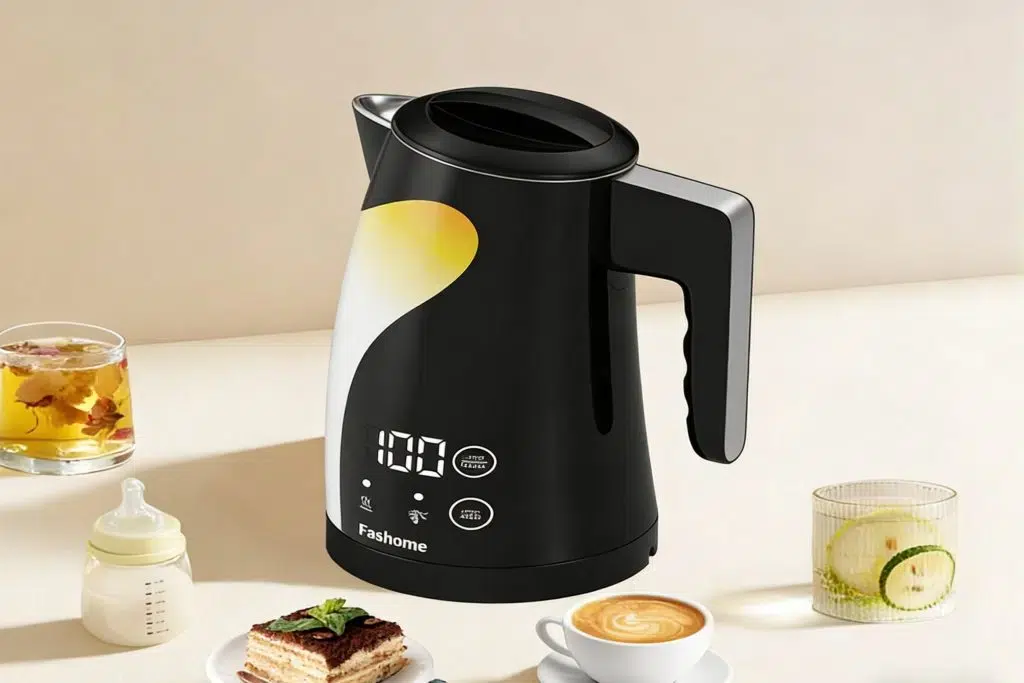
A stainless steel electric kettle is safe for daily use if it has a quality grade like 18/8 or 18/10. Stainless steel does not react with water and lasts a long time. It does not leak harmful substances into water when used normally. That makes a stainless steel electric kettle a reliable choice for a non-toxic tea kettle.
Safety still depends on the grade and how the kettle is built. A Danish study found that 10 of 26 kettles released more than 50 µg/l of nickel into water, so the grade matters. Aokai’s electric kettle takes this further, using a food-grade 18/8 stainless steel interior with smooth, well-finished seams that help limit metal release during daily boiling. This guide explains which grades to trust, the concerns worth knowing, how stainless steel compares with other safe materials, and what to check before buying a non-toxic electric kettle.
Key Takeaways
- Pick a stainless steel kettle that is grade 18/8 or 18/10 for safe daily use.
- Stay away from low-grade 201 steel. It can rust and is not safe to use with food.
- Clean your kettle often with vinegar to stop mineral buildup.
- Look for certifications like UL and FDA to make sure the product is safe and good quality.
- Stainless steel kettles last a long time and do not change how your drinks taste.
Why stainless steel kettles are safe

Non-reactive and stable
Stainless steel has a solid spot in the kitchen because it stays chemically calm. In drinking water, the alloy acts like an inert material. It does not let harmful substances into the water supply, unlike brass, which can leach copper, or plastic, which tends to leach chemicals. This steadiness comes from the alloy’s mix of iron, chromium, and often nickel or molybdenum. When the metal meets oxygen, it forms a thin, protective oxide layer on its surface. That layer blocks rust and keeps the steel stable during long-term contact with water.
Non-reactive – 304 stainless steel is an austenitic chromium-nickel alloy often chosen for food and beverage contact because it resists corrosion and reacts very little with acidic and hot liquids. Unlike some plastics, it is not a polymer and contains no plasticisers.
From a chemistry view, 304 stainless steel forms a thin, invisible chromium oxide layer on its surface—a self-healing passive film that guards it from oxidation. This “passivation layer” is what gives stainless steel its famous long life.
Food-safe grades include 18/8 and 18/10, and 18/0 is also food-safe. The “18” means the percentage of chromium in the alloy. These grades do not leach harmful chemicals into water under normal use. A metallic taste in water is not a sign of toxicity. It often comes from low-quality steel or poor care. Premium 304 stainless steel is made to be non-reactive, so the drink tastes exactly as it should. A stainless steel interior also takes in no flavors or odors, so a simple wash clears the taste of yesterday’s coffee. The stable structure needs no inside coating, which removes any risk from liners that can break down over time. For anyone seeking a non-toxic electric kettle, this chemistry is the main argument.
Durable for daily use
Solid stainless-steel construction is tougher than glass. It handles busy everyday use, and it survives the odd knock that would end a glass kettle’s life.
| Material | Durability Ranking | Behavior When Dropped |
|---|---|---|
| Stainless steel | Highest | Dents instead of shattering; more impact-resistant than glass; typically survives a drop |
| Plastic | High | Impact-resistant; does not shatter when dropped |
| Glass | Lowest | Can crack or shatter; a dropped glass kettle is likely to break |
Stainless steel (specifically 304/18-8) ranks as the most durable of the three materials. It is taste-neutral and resists corrosion. Glass offers equal taste neutrality at the cost of more weight and fragility. Plastic is cheapest but least durable in terms of shattering resistance. A stainless steel kettle therefore suits households that boil water several times a day. The metal body resists dents and wear, and the stainless steel water-contact surfaces keep their finish through years of heating and cooling. That mix of toughness and stability makes stainless steel kettles a dependable pick for a plastic-free kitchen. A non-toxic kettle built this way also supports a plastic-free routine, since the water never touches a polymer chamber. Buyers who want a safe, long-lasting appliance get both properties from one material.
Potential concerns for a safe electric kettle
Low-grade 201 stainless steel
Grade 201 is a cheaper alloy, and it gives up some of what makes a stainless steel kettle reliable. Makers swap part of the nickel for manganese and nitrogen, and nickel usually stays under 4%. That swap makes it weaker against rust. The metal is fine in dry indoor air, but it can pit and rust in damp or chlorinated places. A kettle meets water and heat all day, so it faces exactly those conditions.
| Property of 201 | Why it matters for a kettle |
|---|---|
| Lower nickel content | Weaker rust resistance than 304 |
| Fair to poor rust resistance | Prone to pitting and rust spots in wet, damp use |
| Not food safe | Unlike 300-series grades, it is not rated for drinking water |
| Poor weld rust resistance | Welded seams become prone to rust |
A 201 body also hardens fast when it is shaped, so making a kettle shell is harder and more likely to crack. Buyers who want a non-toxic electric kettle should treat 201 as a grade to avoid. Quality 18/8 or 18/10 steel is the safer choice, and it keeps the stainless steel inside steady over years of use.
Mineral buildup and cleaning
Limescale is not toxic, so a scaled kettle is not an emergency. Taking in a lot of limescale can still upset digestion, and people with sensitive stomachs or kidney problems face a higher risk. Scale also makes tea and coffee cloudy and changes their taste. Regular descaling keeps the kettle safe and working well.
- Mix white vinegar and water in equal parts, and fill the kettle about three-quarters full.
- Boil the mix, then let it sit for about 30 minutes.
- Pour the liquid out, wipe the inside, and boil fresh water until no vinegar taste is left.
- Repeat with a longer soak or a store-bought descaler if scale stays.
Hard water needs descaling every 1–2 months, and soft water every 3–4 months. This simple routine protects the stainless steel inside and supports a plastic-free kitchen. A non-toxic stainless steel kettle stays safe with modest care, and a non-toxic model pays back that habit with steady performance.
Safest materials for tea kettles compared
Safety and performance
Three materials come out on top when shoppers rank the safest materials for tea kettles: borosilicate glass, ceramic, and 18/8 or 18/10 stainless steel. Each one is non-porous, does not react with boiling water, and does not leach chemicals. Borosilicate glass earns a top safety rating and carries no leaching risk, though buyers should confirm the label says borosilicate rather than soda lime. Ceramic and porcelain match that top rating when the glaze comes from a quality brand, and cheap unbranded glazes are the one detail to check. Stainless steel in 18/8 or 18/10 grade (often labeled 304 or 316) sits just below, with minimal leaching risk, and grade 201 should stay off the list.
| Material | Safety Rating | Leaching Risk | Recommended Type |
|---|---|---|---|
| Borosilicate glass | ★★★★★ | None | Borosilicate only (not soda lime) |
| Ceramic / porcelain | ★★★★★ | None (quality brands) | Avoid cheap unbranded glazes |
| Stainless steel (18/8 or 18/10) | ★★★★☆ | Minimal | 18/8 or 18/10 only; avoid 201 |
Performance sets the group apart in practical ways. Glass lets the user watch the boil and the water level, yet it is fragile under thermal shock and drops. Ceramic holds heat very well, and a second cup stays warm after 15 minutes. Stainless steel with double-wall vacuum insulation gives superior thermal retention and resists rust and impact. Among the safest materials for tea kettles, stainless steel wins on toughness, glass wins on visibility, and ceramic wins on heat holding.
Cost and everyday use
Budget shapes the choice as much as safety does. Plastic kettles cost the least and weigh the least, and they suit light use on a tight budget. Glass sits in the middle, and it makes interior cleaning easy to judge by eye. Ceramic costs more, and it rewards that price with even heating and a dishwasher-safe body. Stainless steel covers a wide price range, and mid-range models deliver strong value across years of daily boiling.
Cleaning habits differ by material too. A stainless steel interior wipes clean with a damp cloth and mild detergent, and chlorine-based cleaners should stay away because they cause corrosion. Ceramic resists scratches and stains, though harsh detergents can soak in and affect taste. Glass shows scale clearly, which helps the owner act early.
For a plastic-free kitchen, stainless steel and glass both keep polymers out of the water chamber. A plastic-free electric kettle in either material supports a non-toxic routine, and a stainless steel body adds impact resistance that glass cannot match. Stainless steel tea kettles therefore balance durability with value better than most rivals, and electric tea kettles built from 18/8 or 18/10 steel remain one of the safest picks for daily use. The safest material for tea kettles depends on the buyer’s priorities, yet stainless steel earns its place on nearly every shortlist.
What to look for when buying
Grade and certifications
Shoppers should check the grade label first. Food-grade 18/8 (also called 304) and 18/10 steels work well for drinkware and food contact. Grades with too little nickel or chromium, like 18/0, do not meet that standard for this use.
| Grade | Chromium | Nickel | Key notes |
|---|---|---|---|
| 18/10 | 18% | 10% | Top food-grade; great rust resistance; stable surface that does not react |
| 18/8 | 18% | 8% | Similar performance; slightly less rust resistance; may show wear sooner |
| 18/0 | 18% | 0% | No nickel; more likely to stain and rust |
Chromium forms a thin oxide layer you cannot see, and this layer fights rust and stains. Nickel adds rust resistance and keeps the surface stable. So a good stainless steel interior stays non-toxic for years of use.
Certifications matter too. Buyers should look for these marks on the product and packaging:
- FCC (47 CFR Part 15): kettles count as unintentional radiators, and smart models with WiFi or Bluetooth become intentional radiators.
- UL: following it is voluntary, but UL 1026 covers household electric cooking appliances and confirms electrical safety.
- CE marking: required in the EU, not the United States.
- RoHS: limits hazardous substances in plastics, solder, cables, and circuit boards.
Brands and build quality
Good brands earn trust through testing. Top makers check how smoothly a kettle pours, how well the controls respond, and how long the materials last. Bonded bases resist wear and warping, so a well-built kettle lasts longer than standard models.
A reliable supplier or manufacturer backs that quality with factory audits and lab testing. Helpful checks include a hi-pot test at 1500V for 1 second, a 4-hour running test, a dry-boil test, and a stability test on a 15-degree incline. Buyers can also ask for ISO 9001 audit reports and FDA or LFGB certificates for each material that touches water. A wholesale partner who shares these reports makes checking simple. Custom orders should still come with full test documents, and a factory that welcomes third-party inspection gives extra assurance. This care keeps any plastic-free electric kettle, non-toxic electric kettle, or electric kettle without plastic truly safe.
A stainless steel electric kettle is safe to use every day if it has a good grade like 18/8 or 18/10. These grades fight rust, corrosion, and leaching, and they do not react with hot water. Shoppers should stay away from low-grade 201 steel, which rusts more easily. Cleaning with vinegar or lemon every so often keeps mineral buildup away and protects how the kettle works. Buyers should also check the grade label and certifications before they pay. A well-picked stainless steel kettle is a strong, non-toxic choice for years of daily boiling. A non-toxic electric kettle in 18/8 or 304 steel helps a plastic-free kitchen, and a plastic-free routine gets easy with a non-toxic, plastic-free design. This non-toxic electric kettle earns its spot as a safe, plastic-free staple.
FAQ
Does a stainless steel electric kettle leach nickel into water?
Quality grades release very little nickel. A Danish study found some kettles released more than 50 µg/l, so grade matters. A non-toxic electric kettle built from 18/8 or 18/10 steel keeps release low. Shoppers should avoid 201 steel. A non-toxic model with a certified grade gives the safest daily result.
How can someone tell 201 steel from 304 steel?
A 201 body rusts more easily and shows pitting in damp use. A non-toxic electric kettle in 304 steel resists rust far better. Buyers should check the grade label and ask the supplier for test reports. A non-toxic kettle from a verified factory comes with paperwork that names the grade.
Does stainless steel change the taste of tea or coffee?
No. A non-toxic electric kettle with a stainless interior absorbs no flavors or odors. A simple wash clears the taste of the last drink. A plastic-free kettle in 18/8 steel keeps water neutral, and a non-toxic design means no liner breaks down over time.
How often should a stainless steel kettle be descaled?
Hard water needs descaling every 1–2 months, and soft water every 3–4 months. A non-toxic electric kettle stays safe with this routine. Vinegar and water in equal parts works well. A plastic-free kettle with a clean interior performs better, and a non-toxic habit protects the steel.
Which certifications should a buyer check?
Buyers should look for UL, CE, RoHS, and FCC marks. A non-toxic electric kettle should also carry FDA or LFGB certificates for water-contact materials. A plastic-free kettle from a supplier that shares lab reports gives extra assurance. A non-toxic choice starts with verified documents.


