

12V car kettles generally spend 20 to 30 minutes bringing water to a boil, noticeably slower than household electric kettles. The slower speed stems from low power output, rated merely 100 to 150 watts, far below conventional home kettle power levels. Initial heating may take around 15 minutes in actual use. The following table presents detailed boiling time comparisons.
| Kettle Type | Power Output (W) | Boiling Time (minutes) |
|---|---|---|
| 12V Car Kettle | 100-150 | 15-30 |
| Standard Electric Kettle | 2000+ | Much shorter |
AOKAI is a high-quality kitchen appliance manufacturer and supplier, widely trusted for its stable performance and reliable safety standards.
Key Takeaways
- A 12V car kettle takes 20 to 30 minutes to boil water, which is slower than household kettles.
- Heating speed depends on power wattage; models of 150 watts and above deliver more efficient boiling.
- Use pre-warmed water and fill only required volume to cut heating time and reduce power consumption.
- Inspect cords and secure connections properly, avoiding energy loss caused by faulty or loose wiring.
- Run the car engine during operation to stabilize voltage and prevent vehicle battery drain.
Factors Affecting Electric Kettle Boiling Time
The boiling speed of a 12V car electric kettle is affected by several factors. Understanding these variables helps in choosing the right product for daily use. The standard boiling time is 20 to 30 minutes, but the actual speed will vary depending on the wattage, water capacity, and vehicle battery condition.
Power Output and Wattage
Power is the core factor determining heating efficiency. The higher the wattage, the faster the heating speed. Common 12V car electric kettles have a power range of 100 to 150 watts, while high-power versions can reach 350 watts.
- A 350-watt model takes approximately 8 minutes to boil 500 ml of water.
- A 150-watt model takes 20 to 25 minutes to heat the same volume of water.
High-power models can shorten the heating cycle, thus reducing overall energy consumption.
| Kettle Model | Power Output (W) | Boiling Time (500ml) |
|---|---|---|
| Standard 12V Kettle | 100-150 | 20-30 minutes |
| High Power Car Kettle | 350 | 8-10 minutes |
Water Volume and Temperature
Water volume and initial temperature significantly affect boiling speed. Larger water volumes result in longer heating times; preheated water reaches boiling point faster than cold water. The AOKAI electric kettle features a visual water level indicator and an optimized heating structure to improve boiling efficiency.
Car Battery Limitations
Car electric kettles are powered by the car battery. While most vehicles maintain a stable 12V output, excessive power consumption can lead to voltage drops and battery depletion. Advanced insulation technology and a sophisticated structural design effectively protect battery performance.
Car electric kettles are equipped with comprehensive safety features, including a robust base, an anti-overflow spout, overheat protection, and a double-walled casing. These designs ensure stable and safe operation during journeys.
Understanding these influencing factors helps users choose the right product and quickly and safely boil water in their vehicles.
Kettle Comparison
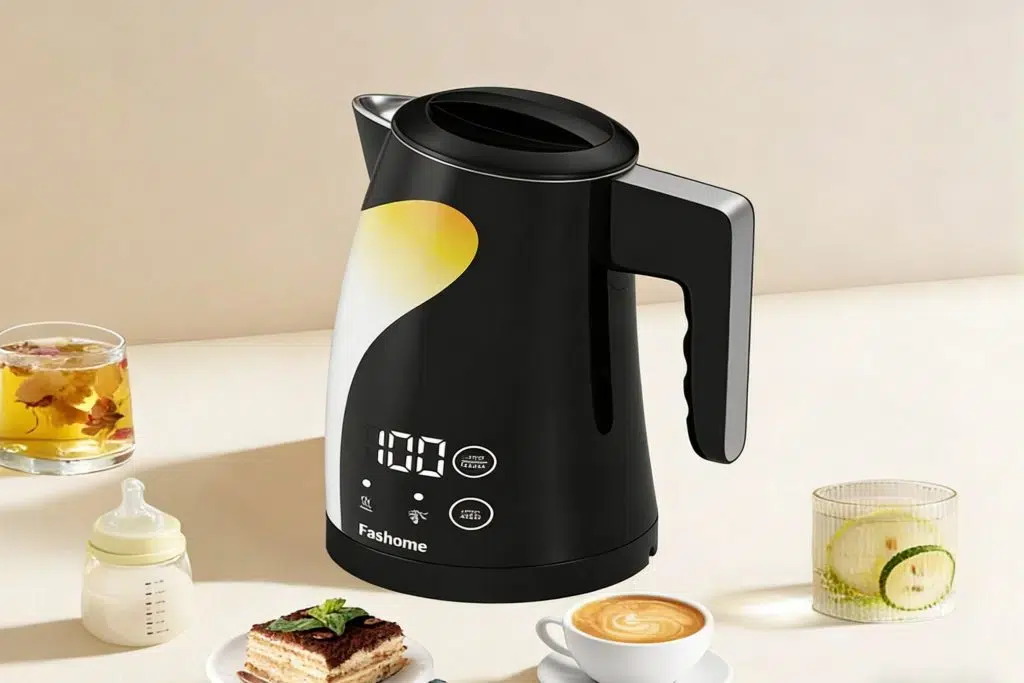
12V vs. Home Kettles
Users often compare the heating efficiency of car electric kettles and household electric kettles. A 12V car electric kettle uses a low-power supply, while a household electric kettle requires a high-power outlet.
A household electric kettle can boil water in just 3 to 5 minutes, far faster than a car electric kettle.
| Kettle Type | Location | Power (W) | Boiling Time (minutes) |
|---|---|---|---|
| Standard 12V Kettle | Car | 100-150 | 20-30 |
| Home Kettle | Kitchen | 2000+ | 3-5 |
Reasons for Time Differences
The fundamental reason for the difference in heating speed lies in the power supply method. Car kettles use a 12V car battery with limited output power, while household electric kettles use high-voltage AC power to achieve rapid heating.
Car batteries cannot continuously and stably discharge at high power, which inevitably slows down the boiling process. Therefore, car kettles are designed with operational safety and energy efficiency in mind, rather than pursuing ultra-fast heating speeds.
Even with a longer heating cycle, portable car kettles remain popular with road travelers due to their convenient in-car heating function. Choosing a reliable brand ensures stable operating quality and ideal boiling results.
Tips to Reduce Boiling Time

Preheat Water
Travelers often want hot water quickly while traveling. Switching to preheated water is a simple and effective way to shorten boiling time, resulting in real savings for 12V car kettles. Using a thermos or hot water from a gas station can significantly speed up the heating process. Water with a higher initial temperature reaches its boiling point faster than cold water. Room temperature water also heats more efficiently than refrigerated water.
Saving Water
The amount of water directly determines boiling time. Reducing water usage speeds up heating and lowers energy consumption. It is recommended to only pour in the required amount of water, rather than filling the kettle completely, to optimize time and energy use. Clear water level indicators are therefore a practical design favored by both businesses and users.
Ensuring Proper Connection
A stable power connection is crucial for the proper functioning of the kettle. Loose or faulty wiring can lead to energy loss and longer boiling times.
A 12V car kettle typically takes 20 to 30 minutes to boil water. Its heating efficiency depends on the wattage, water capacity, and the vehicle’s battery condition. Choosing a reputable supplier like AOKAI ensures stable performance.
To improve safety and shorten heating time, drivers can follow these practical tips:
- Use the kettle while driving to avoid excessive battery drain.
- Place the kettle securely to prevent spills.
- Keep the engine running while using the kettle.
These practices help travelers enjoy convenient and safe hot water on their journeys.
FAQ
How to use a 12V electric kettle in a car?
A 12V electric kettle connects to a 12V power outlet in your car. The kettle uses the car’s voltage to heat water. Most 12V kettles have safety features. Manufacturers designed them with travel needs in mind. Suppliers typically recommend using the kettle only when the engine is running.
Will a 12V electric kettle damage my car battery?
A 12V electric kettle draws power from the car battery. If the engine is off, the voltage may drop. Manufacturers recommend keeping the engine running when using a 12V kettle. This helps maintain a stable voltage and prevents the battery from running out of power.
Why does a 12V electric kettle boil water slowly?
A 12V electric kettle has a lower voltage and lower power output than a household electric kettle. The 12V voltage limits the power output. This makes the kettle heat water more slowly. Wholesalers typically choose 12V kettles for safety and energy efficiency, not speed.
How to use a 12V electric kettle safely?
Users should plug the 12V electric kettle into a 12V power outlet in their vehicle. Start the engine to maintain a stable voltage. The supplier recommends checking the kettle’s power cord and plug. As a trusted manufacturer, AOKAI conducts safety and reliability tests on every 12V electric kettle.
Can a 12V electric kettle be used in a truck or boat?
A 12V electric kettle is suitable for any vehicle equipped with a 12V power outlet and a stable voltage. Many manufacturers offer 12V electric kettles for trucks, boats, and RVs. The kettle requires a stable 12V voltage to perform optimally. Always check the vehicle’s voltage before use.


