
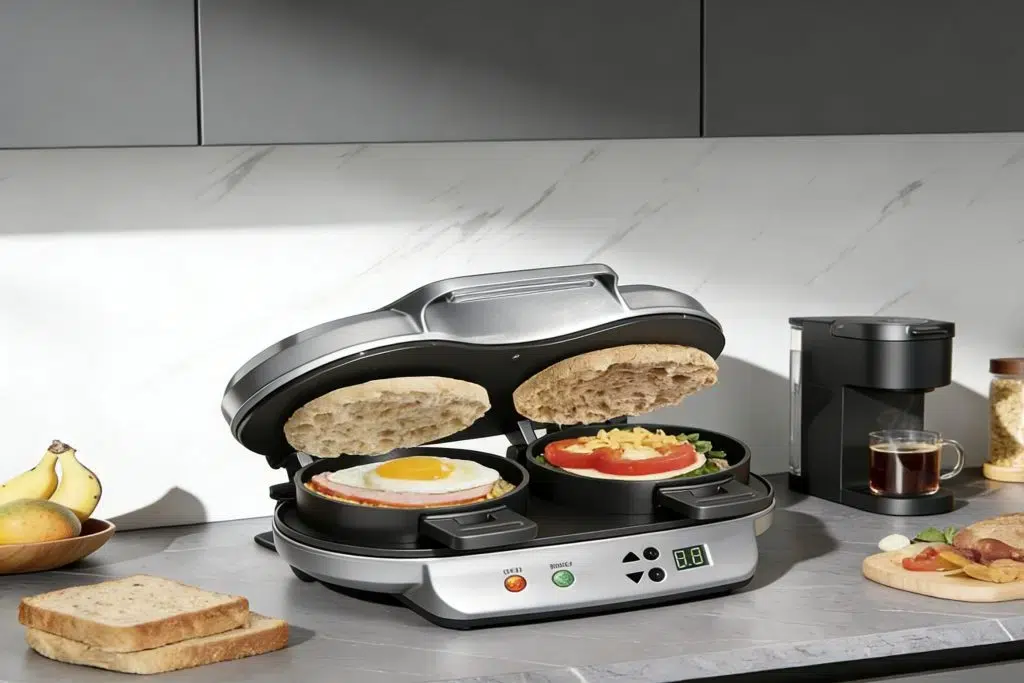
You can crack a raw egg into a sandwich maker. This small appliance heats from both sides at once. The cook preheats the plates, lightly oils them, cracks it, closes the lid, and cooks. A few simple tips keep the process mess-free and prevent undercooked results.
The first attempt may stick a little. Grease the plates well and avoid overfilling. With a bit of practice, a hot breakfast comes together in minutes. The details below explain how sandwich maker works, when it is the right pick, and how to use it cleanly and safely every time.
Key Takeaways
- A sandwich maker cooks a raw egg quickly. Both plates heat the egg. No flipping needed. Cleanup stays easy.
- Preheat the plates. Grease them lightly. This step prevents sticking. It also keeps the egg shape tidy.
- Cook the egg for three to five minutes. Start with three. Check the whites. Fully set whites signal done.
- Keep portions small. One egg per mold works best. Overfilling causes spills. It makes sticky plates.
- Handle eggs safely. Cook eggs to safe temperatures. Choose pasteurized eggs for runny yolks. Use soft tools to protect the plates.
Yes, a Sandwich Maker Can Cook a Raw Egg

A sandwich maker can absolutely cook a raw egg. The appliance heats from both plates at once, so the contents cook evenly without flipping. Many cooks choose this approach for quick breakfasts because it saves time and uses less oil than a frying pan. The non-stick plates release the cooked ingredient easily, which reduces cleanup and avoids extra pans. The same model also handles omelet-style portions, so a family can vary their breakfast routine. Faster cooking and simpler washing make the machine a practical tool for busy mornings.
Preheat and Grease the Cooking Surface
Temperature matters more than most cooks expect. A cook should close the sandwich press and let it heat until the ready indicator appears before adding anything. Most machines have a small indicator light that turns on or off when the plates reach the right temperature. Cold plates cause the raw ingredient to spread and stick. Hot plates set the white quickly and keep the shape tidy. After preheating, a light layer of butter, margarine, or nonstick spray goes on both plates. A thin coating is enough; too much fat makes the final dish greasy. The grease also helps the cooked portion lift away cleanly when done. Greasing both plates prevents most sticking problems. A quick wipe with a paper towel before greasing removes crumbs from an earlier batch.
Crack the Egg into the Bottom Plate
A cook can crack an egg directly into the bottom plate. One portion fits well in the press’s lower ring. The shell should open near the plate edge so the yolk drops into the center. If the white spreads toward the hinge, the next sandwich may catch a stray edge. A gentle crack keeps the yolk intact, which matters for anyone who wants a runny center. Closing the lid should happen right away, before the white travels too far. A pinch of salt and pepper can season the portion before the lid closes.
After closing, the top plate rests just above the food, so heat reaches the white from both sides. Raw beaten eggs cook in 2 to 3 minutes in a closed sandwich press. Whole portions with yolks usually need a little longer, so checking around the three-minute mark is wise. Someone should confirm that the whites are fully set before lifting the lid. Lifting too early can tear the food or leave raw white on the plate. A fold of paper towel can lift the finished portion without scratching the surface.
| Benefit | Sandwich press | Frying pan |
|---|---|---|
| Cooking time | 2 to 3 minutes | Depends on pan heating and flipping |
| Flipping | Not needed | Required for even cooking |
| Oil needed | Little or none | Often a splash for release |
| Cleanup | Wipe the plates | Wash pan and utensils |
This table shows why many cooks prefer the sandwich press. The heating element in the lid cooks the top of the food while the bottom plate cooks the underside, so there is no need to turn it over. A frying pan demands attention and an extra pan. The closed unit delivers a tidy result that slides out onto toast. From preheat to plate the process takes minutes, and the result fits into a breakfast sandwich. The same idea works for sandwiches with fillings, so every sandwich leaves the machine neat and complete.
How to Cook Eggs in a Sandwich Press
After cracking the egg, close the lid and let the sandwich press cook the egg from both sides. The top and bottom plates work together, so no flipping is needed. The exact steps look like this:
- Turn on the electric sandwich press and wait until its ready indicator appears.
- Raise the cover, upper ring, and cooking surface; place the bottom slice of bread in the lower ring for a toastie.
- Lower the cooking surface and upper ring back into position.
- Put the raw egg or raw egg whites directly onto the cooking surface.
- Close the lid and cook for 2–3 minutes, just until the whites begin to set.
- Open the lid and put the top slice of bread over the egg, pressing down gently if needed.
- Pull out the cooking surface, lift the lid and rings, and carefully remove the finished sandwich or egg.
Learning how to use a sandwich press begins with patience and a timer.
Set the Timer for 3 to 5 Minutes
Cooking time varies by machine. A high-wattage sandwich press cooks faster than a lower-wattage model. A cook sets the timer for 3 minutes on the first attempt. After that, the cook checks the egg. If the whites look set and the yolk has the right texture, the egg is done. The 2-to-3-minute mark sets the whites. If a runny yolk is desired, remove the egg once the whites are set. If a firm yolk is desired, continue cooking until the yolk and white are firm.
The wattage of the machine matters. A strong press reaches temperature quickly and cooks the egg evenly. A weaker press may need extra time. The cook should trust the timer but also check the food. The first sandwich from any new press takes a little practice. With practice, the timing becomes automatic. Every sandwich press heats slightly differently.
Check That the Whites Are Fully Set
Before lifting the egg from the plates, the cook must inspect the whites. Fully set whites look opaque and firm. They hold their shape without spreading. No clear or glossy areas should remain on the surface. The white must be thoroughly cooked through, even when the yolk stays runny.
The safest way to check involves looking through the gap between the plates. The cook can open the press slightly to inspect the whites. A quick lift of the lid lets light reach the egg. A glance through the gap shows whether the whites have turned solid. Lifting too high can break the yolk. Instead, the cook tilts the lid slightly and looks inside.
If the whites need more time, close the lid and check again shortly. Meanwhile, the yolk can stay soft. Piercing the yolk while checking doneness makes it spread. A pierced yolk changes the texture of the whites.
Once the whites appear set, remove the food using a silicone spatula or a paper towel fold. The finished egg slides onto toast or into a breakfast sandwich. Many families cook eggs this way each morning. The press cleans up with a quick wipe. This method works for sunny-side-up portions, omelets, and egg toasties. Each variation follows the same timing and checking steps. Once a person learns to cook eggs in the press, the habit sticks.
Try These Sandwich Maker Egg Variations
This appliance makes toasted sandwiches and cooks several egg dishes. A sandwich press can make sunny side up portions and folded omelets; other popular egg preparations for breakfast sandwiches include molded scrambles. The simplest way cracks an egg onto the greased plate; another way beats the eggs, seasons them, and flips. This soft omelet fits into a complete sandwich.
Fried Egg, Omelet, or Egg Toastie
A fried egg is the simplest option. The cook cracks the egg, closes the lid, and waits for the whites to set. A quicker breakfast sandwich uses a thin omelet with onion and capsicum. An egg toastie uses a bread base. A cook places one slice in the mold, cracks an egg on top, adds another, and closes the press. The heated plates cook both sides. Each sandwich leaves the plates tidy.
Other popular egg preparations for breakfast sandwiches include molded scrambled eggs, sheet-pan scrambled eggs baked in a 13×9 pan and sliced into squares, muffin-tin eggs, over-easy eggs, and poached eggs. In a sandwich press, the omelet is the clear popular alternative to a plain fried egg: pour beaten egg onto the oiled, preheated plate and flip it halfway, or cook a sunny-side-up egg by cracking an egg directly onto the plate.
Add Cheese, Bacon, or Bread
The press handles more than a single portion. A cook can build a full grilled cheese sandwich around the egg. They layer cheese, fully-cooked bacon, and a beaten egg between buttered slices. This melty grilled cheese sandwich turns a meal into breakfast. The machine can also toast sandwiches in minutes. The finished sandwich slides out.
Bacon needs care. Raw bacon is unsafe and must cook fully before entering the sandwich press. The sandwich press cannot safely cook raw bacon with a raw egg. Fully-cooked bacon pieces add smoky flavor. One omelet-style version uses four bread slices, two whisked eggs, half a cup of grated cheese, and a tablespoon of butter, with mayonnaise spread on the bread before closing the press. Egg-filled bread slices make the meal portable. A hot sandwich press turns ingredients into a fast morning meal. These sandwiches can feed the whole family.
Egg Safety and Mess-Free Tips
A sandwich press cooks a single egg quickly, yet care remains essential. Salmonella can live on the shell or inside the egg. A cook should choose pasteurized eggs when the final dish keeps the yolks still runny. A hot portion served alone should reach 145°F. A portion mixed into a breakfast sandwich needs 165°F. Hands, plates, and tools spread bacteria too. Washing hands and sanitizing surfaces prevents cross-contamination.
| Risk | Key evidence | Preventive action |
|---|---|---|
| Salmonella infection | Shell and interior can carry bacteria. | Use pasteurized products or cook fully. |
| Undercooking | Safe temperatures range from 145°F to 165°F. | Check internal temperature before serving. |
| Cross-contamination | Bacteria can move to hands and surfaces. | Wash hands and sanitize all tools. |
Don’t Overfill the Mold
The sandwich press works best with one standard portion per mold. Overfilling creates a sticky mess. Liquid spills past the mold as the lid closes. That liquid burns onto the plates and hardens. A cook should keep fillings level with the rim. Grated cheese and ham should lie flat, not pile. The lid must close without force. If the lid resists, the portion is too large. A properly filled mold cooks evenly and releases cleanly. This simple habit also prevents undercooking.
Keep the Yolk Intact for a Runny Center
Set whites protect the yolk. If the desired result has a liquid yolk, the cook keeps the yolk intact. A gentle crack over the mold keeps the membrane whole. While checking, the cook should avoid piercing the yolk. A fork tip breaks the sac and releases the golden center early. This changes the texture and slows the cooking process. Instead, lift the lid a small amount and inspect the whites. Opaque whites without clear wet spots show that the portion is ready. The yolk may remain liquid, and the white stays safe to eat. A sandwich press then lifts away the cooked portion with a silicone spatula. The result fits neatly onto toast for a fast breakfast.
How to Clean Your Sandwich Press
A clean sandwich press delivers better eggs. Food residue from a raw egg can burn onto the plates. The burned spot sticks to the next meal. Knowing how to clean a sandwich press protects the nonstick surface. Cleanup begins after the unit cools completely.
Cool, Wipe, and Gently Remove Stuck Egg
The press needs full cooling before cleaning. A damp paper towel handles light wiping. The owner wipes away loose crumbs and grease with gentle strokes. Stuck egg needs a different approach. A wet paper towel can soften the hardened spot. Then a soft cloth lifts it away.
A baking soda paste handles tougher spots. The cook mixes baking soda with a little water. They apply the paste to the cooled plates. The paste hardens as it dries. Then a microfiber or soft cloth polishes it off. Mild detergent also works on the press. A wet paper towel carries a small amount of detergent. The owner wipes several times with a damp paper towel to remove soap residue. The same gentle routine suits an omelet press after eggs.
Recommended tools for a sandwich press:
- Baking soda paste left to harden
- Microfiber or soft cloth
- Soft-bristled toothbrush for crevices
- Non-abrasive sponge or soft brush
- Damp paper towels
- Mild detergent with water
Avoid Harsh Scrubbers on Nonstick Plates
The nonstick coating scratches easily. Harsh scrubbers damage the surface permanently. Steel wool and scouring pads are unsafe. A damaged plate releases chemicals and sticks to food. The owner avoids anything abrasive. An electric press heats quickly when the plates stay clean.
| Cleaning tool | Safe for nonstick sandwich press plates? |
|---|---|
| Soft cloth | Yes |
| Plastic-free sponge | Yes |
| Soft sponge | Yes |
| Nylon scrubbing pad | Yes |
| Abrasive scrubber / scouring pad | No |
| Steel wool | No |
| Oven cleaner / harsh detergent | No |
The owner uses only soft tools. This protects the coating and keeps the press working. The press releases food easily when the plates stay smooth. A well-maintained sandwich press lasts for years.
A raw egg cooks cleanly in a sandwich maker when someone preheats the plates, oils them lightly, and waits until the whites set. The first attempt may require extra practice, yet the result rewards the effort. Check the whites before lifting the lid. Serve the egg between bread or with toast.
A cook can make an omelet-style egg or assemble an egg toastie for an easy morning meal. Both options use the same sandwich press and finish in minutes. Anyone who keeps portions small and checks the whites will enjoy a fast hot breakfast with minimal cleanup. Warm plates deliver a better first try.
FAQ
Can a sandwich press cook a raw egg without flipping?
Yes. A sandwich press heats the top and bottom plates at once. The egg sets from both sides. The cook slides the finished sandwich onto a plate without turning anything.
How long should the cook set the timer?
A cook starts with the 2-to-3-minute range. Raw beaten eggs cook in 2 to 3 minutes in a closed sandwich press. For fully firm yolks, continue cooking until the yolk and white are firm. Machine wattage changes the time, so the cook checks the whites inside the sandwich press before serving.
Which fillings make a complete breakfast?
Cheese, cooked bacon, and bread work well. A second slice of bread on top makes a warm sandwich. The cook closes the sandwich press, and the melted result fits into breakfast sandwiches. A sandwich press holds both layers.
How does the cook avoid a sticky mess?
Keep the filling level with the rim. One egg per mold cooks evenly. An overfilled sandwich press spills liquid onto the plates. That residue burns onto the sandwich press and hardens. A neat sandwich lifts away cleanly.
How does the cook clean the plates afterward?
Wait for the sandwich press to cool. A damp cloth lifts soft residue. A wet paper towel softens stuck spots. Steel wool ruins the nonstick surface of the sandwich press. The plates then stay smooth, and the next sandwich releases easily.


