Yes — a solid wood cat tree helps cats in many ways. These products are a leading choice in the premium pet-furniture market because they answer three needs at once: safe scratching, physical stability, and a natural feel cats recognize. Pet owners and the brands that serve them care about safety first, and the right wood, finish, and base design are what separate a product that lasts from one that gets returned.
Cat trees support an indoor cat’s behavior, physical health, and emotional well-being. The demand is steady and growing. Cats need safe vertical space to climb, scratch, and rest at home. This guide covers safe wood sourcing, structural engineering, material comparison, and the manufacturing practices a buyer should expect from a supplier — written for brand owners, importers, and private-label buyers rather than end consumers.
Key Takeaways
- Choose hardwoods like beech or oak for safe, non-toxic cat trees.
- Solid wood bases prevent tipping with a low center of gravity.
- Wood scratching surfaces last years without fraying or trapping dirt.
- Mix sisal with wood to satisfy more cats and reduce upkeep.
- Safe wood cat trees build customer trust and lower product returns.
Sourcing Safe Woods for Non-Toxic Cat Trees
Picking the right wood is the key to a safe, long-lasting cat tree. Not every species handles daily clawing and jumping the same way. A dependable supplier needs the testing and documentation to prove what its product is made of. Buyers who skip wood specification at the sourcing stage tend to absorb the cost later, as a wave of “scratched too fast” or “tipped over” complaints within the first six months on shelf.
Premium Hardwoods for Cat Trees
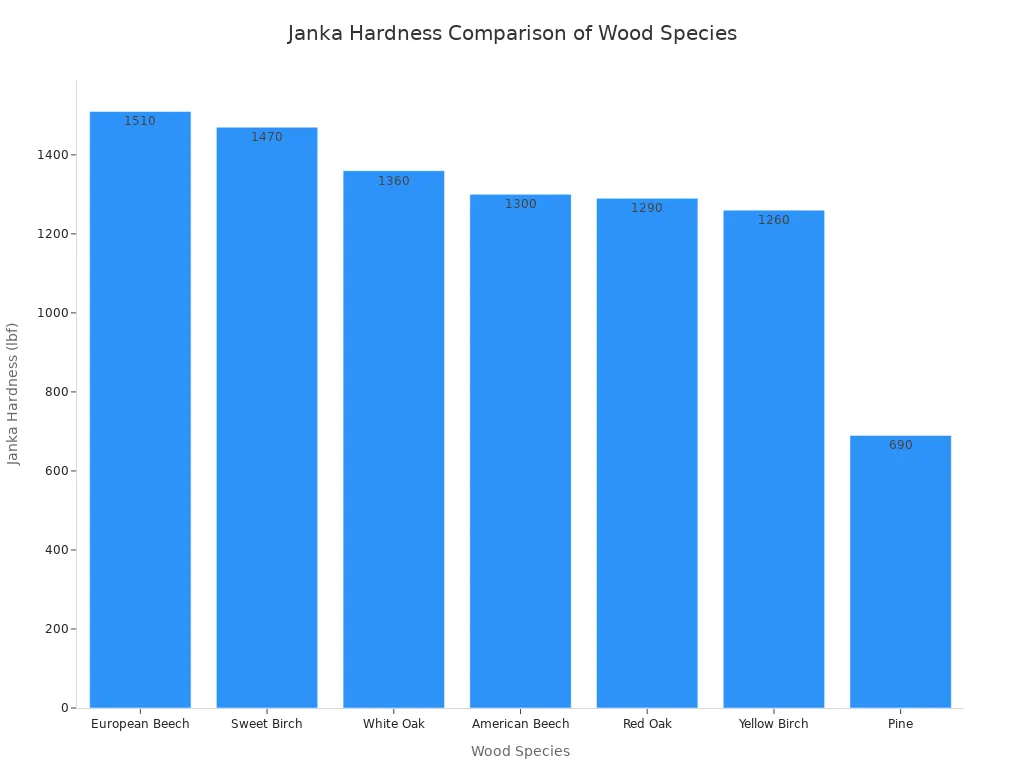
Hardwoods such as beech, birch, and oak are the best wood for cat trees because they are dense and strong. They resist scratching, hold their shape, and give an active cat a steady base. The Janka test — the standard hardness scale published by the U.S. Forest Products Laboratory — measures how well a wood resists denting and wear; higher numbers mean a harder, longer-lasting surface. Each species has its own mix of hardness, weight, and grain. The table below lists Janka scores for the common choices.
| Wood Species | Janka Hardness (lbf) |
| European Beech | 1,510 |
| American Beech | 1,300 |
| Sweet Birch | 1,470 |
| Yellow Birch | 1,260 |
| White Oak | 1,360 |
| Red Oak | 1,290 |
These scores explain why top hardwoods give strong scratch resistance and long service life. A maker who specifies European beech or white oak gives customers a product that survives years of clawing and jumping. The tight grain of these woods draws out a cat’s natural urge to scratch — the same behavior the Cornell Feline Health Center describes as central to feline claw health and territory marking. A surface that resists well encourages that habit on the tree instead of on home furniture. Hardwood takes the force without damage and, unlike softwood, stays smooth and splinter-free for years. A factory that builds high-end cat furniture sources these woods from audited mills to keep quality consistent.ears. A factory that makes high-end cat furniture buys these woods from checked mills to keep quality steady.
Avoiding Unsafe Finishes and Softwoods
Softwoods like pine create real problems for wood cat trees. Pine scores only 690 on the Janka scale — far too soft for climbing and scratching.
Pine (Janka 690) is too soft for cat trees. Deep scratch marks appear within weeks. Surfaces turn rough and splintery, the wood dents under weight in months, and its light weight makes the tree tip easily when a cat jumps. Pine cat trees usually last less than a year or two.
Pine itself is not poisonous, but its weak structure leads to early breakage, complaints, and returns — exactly the pattern our quality team sees when a low-cost line skips hardwood. Good sellers reserve hardwoods for every weight-bearing part. Custom makers can pick hardwood grades and thicknesses to suit large or multi-cat homes. A bulk buyer should always confirm the wood species in the bill of materials and request mill documentation from the factory.
The finish matters as much as the wood. Many off-the-shelf wood treatments contain VOCs or heavy metals unsafe for pets. The U.S. Consumer Product Safety Commission sets the baseline for surface coatings on furniture; any finish a cat can lick should meet the heavy-metal limits used in toy and child-product safety standards (e.g., ASTM F963). Water-based sealants, natural oils, and pet-safe varnishes protect both the wood and the cat. A supplier that runs incoming and final inspections against these limits — rather than trusting the label — is the one worth buying from.
The market rewards this discipline. The global sustainable-pet-products segment reached about $35.1 billion in 2024 and is forecast to grow roughly 7.6% a year through 2034. Buyers — and the brands sourcing for them — increasingly ask for proof of non-toxic materials and responsible wood sourcing. A seller that can show finish-ingredient declarations and documented wood origin earns a clear edge, and the same discipline cuts after-sale cost and protects the brand’s name over time.
In practice, the same B2B buyer who sources a wooden cat tree is often building out a wider smart-pet-home line — a smart automatic pet feeder is the SKU most often named alongside a cat tree in early briefs. Running both on one OEM platform keeps quality control consistent and packaging aligned across the range.
Engineering for Safety: Why Solid Wood Wins on Stability

A cat tree has to stay standing when a cat launches onto it. Solid wood cat trees carry a heavy base and a low center of gravity, which prevents tipping — most important for large cats or multi-cat homes. A maker who engineers for weight and steadiness earns buyer trust, and the physics is not complicated.
The Physics of a Heavy, Solid Base
Base size sets stability. The base should be at least one-third as deep as the tree is tall: a 6-foot tree needs a base 20 to 24 inches deep. Round bases need a wider diameter to match a rectangular base of equal area. Most mass should sit low; heavy hideouts placed at the bottom keep the center of gravity down, while weight high up forces any base to work harder.
Floor contact matters too. The bottom should grip with felt pads, rubber feet, or a textured surface so it will not slide on hardwood, tile, or rug. Slick plastic bases are a common failure point — the same reason child-safety guidance such as the CPSC Anchor It! program tells households to anchor tall furniture.
| Build Type | Mass | Center of Gravity | Tipping Likelihood |
| Solid Wood Base | High | Low / grounded | Very low |
| Lightweight MDF Base | Lower | Higher | Moderate–high when leaping |
A jumping cat generates a moving force 1.5–2× its body weight. A 22-pound cat leaping from 16 inches hits with 33–44 pounds of force. Solid wood absorbs that without bending or swaying; plush towers spread it and eventually wobble. For cats of 12 pounds or more, add 25–50% to the base-size rule. Multi-cat homes need a heavier base and, ideally, wall anchoring.
A custom design also helps cats with special needs. Step heights can be lowered for cats that jump only a few inches; the largest gap between platforms should be 8 inches, the best bottom step 5–6 inches high, and platforms widened to at least 15 inches of usable space so senior cats can turn around. Wall-mounted designs remove the wobble that discourages less-mobile cats.
Natural Wood as a Durable Scratching Surface
Cats scratch to mark territory and maintain claws; the surface has to survive repeated force. The dense face of solid wood answers that urge and lasts far longer than carpet without fraying.
Wood is another type of scratching surface. A wood post will be very durable, more so than sisal. It also will not retain dirt or leave bits of itself lying around.
That durability keeps the product clean in any home. Carpet sheds and traps dirt; wood stays smooth and splinter-free for years. A textured, matte, or natural finish grips better than a glossy one, helping weaker-clawed cats hold on. A supplier that pairs the right species with the right finish gives brands a product that supports cat comfort and limits post-sale complaints.
Market Positioning: Solid Wood vs. Carpet and Sisal Alternatives
Cats feel scratching surfaces differently. Some like the hard truth of solid wood under the claws; others prefer the give of sisal rope. A smart maker offers both in one product, capturing more of the market and more cats.
Why Buyers (and Cats) Prefer the “Real Tree” Look
Wooden cat trees recreate a “real tree” climb that suits indoor cats mentally and physically. The hard, durable face of solid wood mimics climbing and brings out more confident, natural behavior. The grain itself acts as the finish — no fabric or carpet wrap needed — so the piece reads as furniture, not pet gear, and fits modern home decor.
Solid wood is also easy to clean and does not retain dirt or shed debris, which matters for households that keep several pieces of pet furniture.
The Winning Combo: Adding Sisal to Solid Wood

The best answer depends on the cat. Wooden cat trees win on toughness and natural feel, but mixing materials gives cats more choice. A wood cat tree with sisal-wrapped posts serves both preferences.
| Material | Durability | Upkeep |
| Sisal Rope | Less durable than solid wood | May require more frequent attention |
| Solid Wood | Very durable; more durable than sisal | Easy to clean; does not retain dirt or leave bits |
Wood combined with sisal or other textures gives more scratching pleasure and lowers long-term upkeep. Wood structures resist wear and keep their look across years of use.
For brands moving into pet-on-the-go, a complementary pet backpack often runs on the same quality system the cat tree is built on — a practical way to extend the SKU range without standing up a second supplier.
A wood cat tree made from safe hardwoods and pet-safe finishes is a sound buy: it protects the cat and the brand’s reputation. Makers should follow three rules — specify strong hardwoods, require safe coatings, and put weight and steadiness first in every build.
FAQ
Are wooden cat trees safe for cats?
Yes, when built correctly. A responsible manufacturer uses hardwoods like beech, birch, or oak and applies pet-safe finishes that meet heavy-metal limits for surfaces a cat can lick. This removes the toxic risk.
How long do wooden cat trees last compared to carpet models?
Solid wood cat trees typically last 3–5 years, while carpet and sisal models often need replacement every 6–18 months. Wood resists scratching, wipes clean, and does not retain dirt.
Why do cats prefer solid wood scratching surfaces?
Cats scratch to mark territory and maintain claws. The dense surface of solid wood answers that natural urge, stands up to repeated clawing, and does not retain dirt or shed fibers.
What makes a wood cat tree stable for large or multiple cats?
A heavy, low center of gravity prevents tipping. The base should be at least one-third as deep as the tree is tall. A jumping cat generates 1.5–2× its body weight in force; solid wood absorbs that without bending or swaying.
Can a factory customize a wood cat tree for special-needs cats?
Yes. Step heights can be lowered, the largest platform gap held to 8 inches, the bottom step set at 5–6 inches, and platforms widened to at least 15 inches of usable space. Wall-mounted designs remove wobble for less-mobile cats.
What finish is safest for a wood cat tree?
Water-based sealants, natural oils, and pet-safe varnishes that meet heavy-metal limits for child-product safety (e.g., ASTM F963) are the safest choice. Avoid oil-based polyurethanes and any finish not lab-tested for pet contact.